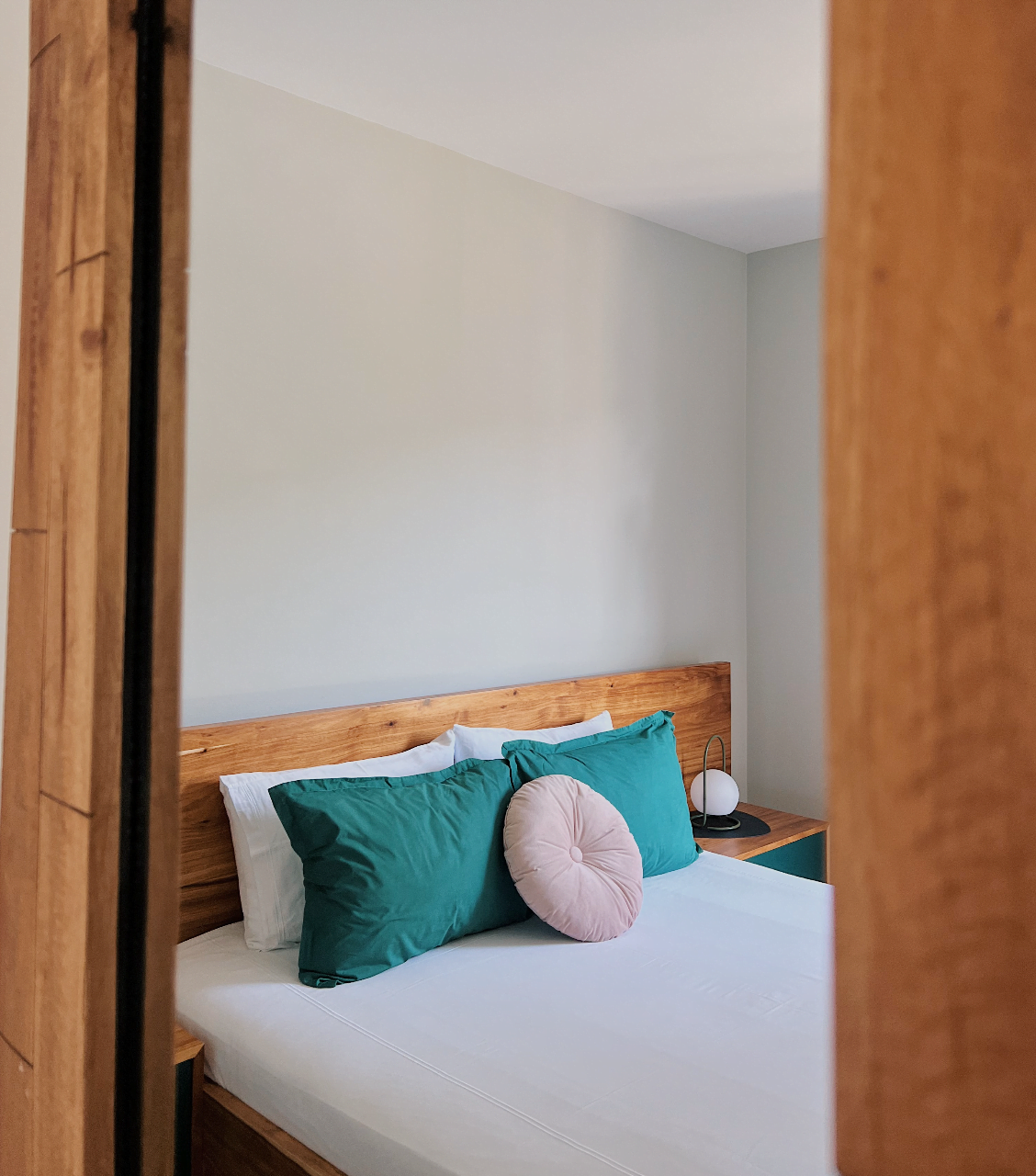

If you’re weighing Cascais vs Lisbon and which is better for working remotely, you’re asking one of the most common questions we hear at Luna House. A guest arrives for a two-week workation, falls into a comfortable rhythm of morning runs along the seafront and focused afternoon work sessions, and then starts wondering: should I stay in Cascais, or would I be better off relocating to Lisbon? The answer depends less on which city is “better” and more on how you actually work and what you want your daily life to look like.
Both cities are legitimate remote work bases with solid internet infrastructure, good coffee, and enough expat community to feel at home quickly. But they offer meaningfully different day-to-day experiences, and the cost gap, while not dramatic, is real. This guide cuts through the lifestyle noise and gives you concrete numbers on rent, monthly costs, internet speeds, coworking options, commute logistics, and the specific neighborhoods worth your attention. By the end, you’ll have a side-by-side budget, three neighborhood picks per city, and a short decision framework to make the call with confidence.
Cascais vs Lisbon, Which Is Better for Working Remotely?
Before diving into the numbers, here’s the short answer: Cascais suits remote workers who want a quieter pace, a tight-knit community, and the Atlantic on their doorstep. Lisbon suits those who want urban variety, denser coworking infrastructure, and easier airport access. The sections below break down each factor so you can match the city to your actual work style.
Cost of living: what your monthly budget actually looks like
Rent: furnished apartments in both cities compared
Long-term furnished one-bedroom apartments in central Lisbon typically run €1,200 to €1,800 per month, with prime neighborhoods like Príncipe Real and Chiado pushing toward the higher end. (For a broader look at typical Lisbon prices, check this recent overview of the Lisbon cost of living.) Cascais comes in slightly lower on comparable long-term leases, usually €1,000 to €1,500 per month for a well-located furnished unit. That gap is real, but it narrows quickly on short-term stays. Both cities can push €1,500 to €2,800 or more per month for a furnished monthly rental with a decent location and setup.
Cascais’ cost advantage is most visible when you’re committing to a longer lease, not when you’re booking a one-month furnished apartment on a platform. If you’re testing the waters for four to eight weeks before deciding, the rent difference between the two cities is smaller than most people expect. For an extra data point on Cascais-specific everyday costs, see this Cascais cost of living breakdown. At Luna House during winter coliving, which starts from November to March you can taste your stay from 4 weeks to 5 months. Stay in Private Room with Shared WC, daily breakfast, weekly cleaning, access to coworking costs between 1350 euros to 1500 euros. For me information please check our Coliving Page or just simply send us WhatsApp message.
Sample monthly budget for a single remote worker
Outside of rent, here’s where your money actually goes each month. Groceries run €250 to €350 in Lisbon and €260 to €360 in Cascais, the difference is modest, though some Cascais supermarkets price slightly higher than their Lisbon equivalents. Eating out ranges from €120 to €250 in Lisbon versus €140 to €280 in Cascais, where restaurant pricing skews more tourist-oriented, especially near the seafront.
Utilities land at €90 to €150 in Lisbon and €100 to €170 in Cascais. Transport is where the gap opens up: Lisbon-based workers who use the metro and bus regularly spend €30 to €50 per month, while Cascais-based workers who commute into Lisbon a few times a week or rely on ride-hailing can spend €50 to €150. A realistic middle-ground monthly total, excluding rent, sits around €650 in Lisbon and €750 in Cascais. Neither city is cheap, but both are far more manageable than comparable Western European capitals.
Internet and coworking: where you’ll do your best work
Broadband and mobile speeds: connectivity is not the issue
Fixed broadband in central Lisbon averages around 100 to 150 Mbps download and 50 to 80 Mbps upload on standard fiber plans, with some providers like MEO delivering closer to 170 Mbps down. Mobile performance is even stronger: Ookla’s Speedtest data puts Lisbon’s median mobile download at over 230 Mbps on 5G, ranking it among the fastest mobile markets in major European cities.
Cascais sits in the same network corridor and delivers comparable fiber speeds, typically 100 to 200 Mbps on modern plans from the same major operators. Mobile coverage is solid across town, though it’s more location-dependent than central Lisbon. Coastal and lower-density areas can see more variation, and deep-indoor performance depends on the building. For remote work purposes, connectivity is strong in both cities. The question isn’t whether the internet works, it’s whether your specific apartment has a good setup. Also Cascais has its own Wi-Fi through out the city, which makes it super cool and enjoy the ocean waves while working.
Coworking options: choice versus quality
Lisbon has a deeper bench of coworking spaces. Second Home and LACS are both well-reviewed by remote workers, with LACS holding a 4.5 out of 5 on Google across nearly 500 reviews (as of early 2026). Day passes run around €13.50, and monthly hot desks start from €120 per month plus VAT. If you want a curated list of top options in the city, this roundup of the 10 best coworking spaces in Lisbon is a handy starting point.
Cascais has at least four dedicated coworking spaces. Among them, Luna House offers the most integrated setup: 120 Mbps fiber, a conference room, a phone booth, and a printing station, all included within the coliving or coworking membership. For nomads who want their workspace and accommodation under one roof rather than commuting between the two, that removes a lot of daily friction. Lisbon has more options for variety-seekers, but Luna House delivers a cohesive, all-in-one setup that standalone coworking spaces can’t replicate.
Commute and travel: how connected are you?
The Cascais Line: fast, affordable, and genuinely reliable
The Cascais to Cais do Sodré train journey takes 37 to 40 minutes and costs around €2.30 each way. On weekday peak hours, the line runs roughly every 12 minutes; during off-peak hours, service drops to every 20 to 30 minutes. Trains run from around 5:30 AM until late evening, with some services extending past midnight. For official schedule and route details, see the Cascais tourism page on trains from Cais do Sodré to Cascais. The page is updated by April 2026.
This makes Cascais a real commuter option rather than just a scenic detour. Need to attend a coworking event in Lisbon, meet a client, or catch a show? You’re in central Lisbon in under 40 minutes, door to door, for around the price of a coffee. That accessibility changes the calculation for many people who initially assume Cascais is too remote for anything other than deep-focus work weeks.
Getting to Lisbon airport: the gap that matters for frequent flyers
A taxi or ride-hail from Cascais to Lisbon Airport runs €35 to €50, roughly double the €15 to €25 it costs from central Lisbon. For a nomad who travels internationally every few weeks, that’s a €20 to €30 difference per trip that adds up quickly across a season. Early morning departures are where this gap is felt most, since public transport options from Cascais to the airport at 5 AM are limited.
If your work involves regular transatlantic flights or frequent regional travel, Lisbon-based workers have a clear logistical edge on airport access. For someone planning a longer stay with fewer flight movements, the Cascais premium is more manageable. But you can always just rent a car. Best tip to do it from the airport as it slightly cheaper and for a period longer than 2 weeks.
Neighborhoods to know: where to actually base yourself
Three Lisbon neighborhoods worth considering
Príncipe Real is the most consistently recommended neighborhood for remote workers who want to be in the city. It’s walkable, aesthetically pleasing, dense with independent cafés, and positioned between the tourist center and quieter residential streets. Rents are at the higher end of the Lisbon range, but you get a lot of day-to-day quality in return.
Intendente and Mouraria offer a more affordable and increasingly creative alternative. The area has a grittier energy than Príncipe Real but a genuine community of freelancers, artists, and younger nomads who have settled here over the past few years. It’s well-connected by metro and within walking distance of several good coworking options.
Belém and Ajuda suit remote workers who want a quieter, greener setting with river proximity but fewer tourists. It’s removed from the center, which is either a benefit or a drawback depending on how much you rely on spontaneous social plans.
Three areas to consider in Cascais
Central Cascais town is the obvious first choice for most arrivals: walkable, ocean-adjacent, and close to every amenity you need on a daily basis. It’s the best base for short to medium stays, and it’s where you’ll find the highest concentration of cafés, restaurants, and community spaces, including Luna House. For ideas on local sights and day trips, see our local tips: what to see in Cascais.
Estoril, one stop east on the train line, offers a slightly more polished and marginally more affordable alternative. It has its own beach, good transport connections, and a quieter residential character without fully detaching from the Cascais social scene.
Birre and São João do Estoril appeal most to expats settling in for a full season. Rents tend to be better value on longer-term leases, the streets are quieter, and the area has a local feel that the town center doesn’t always offer. All three are within easy reach of the train line, keeping central Lisbon well within reach.
Which base fits your remote work style? A practical decision guide
Why Lisbon may be the better choice for working remotely
Lisbon suits nomads who thrive on urban variety and want to explore different neighborhoods, coworking spaces, and social scenes before settling anywhere. It’s also the better choice if you’re traveling on a tighter budget, especially on transport, or if you fly in and out of Portugal every few weeks. For anyone new to Portugal who wants maximum exposure before committing to a specific area, starting in Lisbon makes practical sense.
The city also wins for anyone whose work relies on frequent in-person networking or attending startup and creative events. The density of meetups, coworking communities, and professional gatherings in Lisbon is noticeably higher than in Cascais, and that access matters if your work is relationship-driven.
Why Cascais may be the better choice for working remotely
Cascais suits nomads who want a quieter daily rhythm, value community depth over variety, and are planning a stay of four weeks or longer. The coliving season from November through March, when Luna House runs curated programming for long-stay guests, including yoga sessions, networking nights, culinary workshops, and weekend hikes, creates the kind of built-in social structure that solo nomads often struggle to build from scratch in a city apartment.
If your ideal workday involves a focused morning session, a lunchtime walk along the Atlantic, and an evening on a terrace rather than a bar crawl, Cascais consistently delivers that. To help you decide, work through these three questions:
- Do you need to attend in-person events in Lisbon more than twice a week?
- Do you fly internationally more than twice a month?
- Do you prefer exploring a new city over building roots in one place?
If you answered yes to two or all three, start in Lisbon. If most of your answers were no, Cascais is likely your better base.
Making the call: you don’t have to choose forever
Lisbon wins on variety, transport affordability, coworking density, and airport access. Cascais wins on pace of life, community depth, and the unique value of a coliving model for longer stays. Some nomads split the difference entirely, spending their working weeks in Cascais and making a day or two in Lisbon part of their rhythm whenever the calendar demands it. The 40-minute train makes that a fully viable arrangement.
The most practical advice is to test before you commit. Book a short stay before signing any lease and get a real feel for the daily rhythm of each place. If you want to try the Cascais experience with a built-in community, a proper work setup, and none of the friction of finding a furnished apartment from abroad, Luna House is a natural starting point. Flexible stays, a dedicated coworking space, and a curated social calendar remove most of the guesswork from the first few weeks.
FAQ: Cascais vs Lisbon for remote work
Is Cascais or Lisbon better for working remotely on a budget?
Lisbon has a slight edge on a tight budget, mainly due to lower transport costs and more competitive short-term rental pricing at the lower end of the market. Cascais can offer better value on longer-term leases, but day-to-day costs, particularly dining near the seafront, run a little higher.
Can you live in Cascais and work in Lisbon?
Yes, and many people do. The Cascais Line runs to Cais do Sodré in 37 to 40 minutes for around €2.30 each way, making it a realistic daily or several-times-a-week commute. If you’re traveling to Lisbon for client meetings or events rather than a fixed office, the logistics are straightforward.
Which city has better coworking spaces for digital nomads?
Lisbon has more options in terms of volume and variety. Cascais has fewer spaces, but Luna House offers an all-in-one coliving and coworking setup that removes the need to coordinate housing and workspace separately, a practical advantage for nomads on stays of a month or more.
Is Cascais worth it compared to Lisbon for a long stay?
For stays of four weeks or longer, Cascais often makes more sense. The pace is slower, the community is easier to break into, and the combination of ocean access with a workable commute to Lisbon gives you the best of both environments. So when it comes to Cascais vs Lisbon, which is better for working remotely on a longer timeline? Cascais has a strong case.
Both cities are legitimate remote work bases with solid internet infrastructure, good coffee, and enough expat community to feel at home quickly. But they offer meaningfully different day-to-day experiences, and the cost gap, while not dramatic, is real. This guide cuts through the lifestyle noise and gives you concrete numbers on rent, monthly costs, internet speeds, coworking options, commute logistics, and the specific neighborhoods worth your attention. By the end, you’ll have a side-by-side budget, three neighborhood picks per city, and a short decision framework to make the call with confidence.